
Social media now directly influences how homeowners find and vet roofing companies. As of BrightLocal’s 2025 Local Consumer Review Survey, more than three-quarters of US consumers watch video content when researching local businesses, and the single most-consumed format is video that the business posted about its own products or services.
For roofing companies, this changes the role of social channels. Social content is no longer a branding side project; it feeds the same discovery and trust signals that determine visibility in Google Search, AI Overviews, and AI Mode.
The following post outlines 9 social media marketing tips and ideas from Roofing Webmasters.
Key Takeaways
- Video content from platforms like YouTube and TikTok is eligible to appear in Google Search results and AI features, according to Google’s search documentation.
- More than 75% of US consumers consume video when researching local businesses (BrightLocal, 2025).
- 37% of consumers use Instagram and 29% use TikTok as alternative local-business review platforms (BrightLocal Local Consumer Review Survey, 2026).
- The sameAs schema property is Google’s documented method for linking a roofing company’s social profiles to its website as one business entity.
- The 80/20 rule, 80% educational and entertainment content, 20% promotional content, applies to both your content library and individual posts.
- Organic social builds search visibility and trust; paid social (Meta Ads) and Google Local Services Ads are the channels for direct lead generation.
- Social media marketing has clear limits: commercial roofers, rural service areas, and solo operators with no delegable time need a modified approach.
1) Leverage Social Media to Rank on Google SERPs
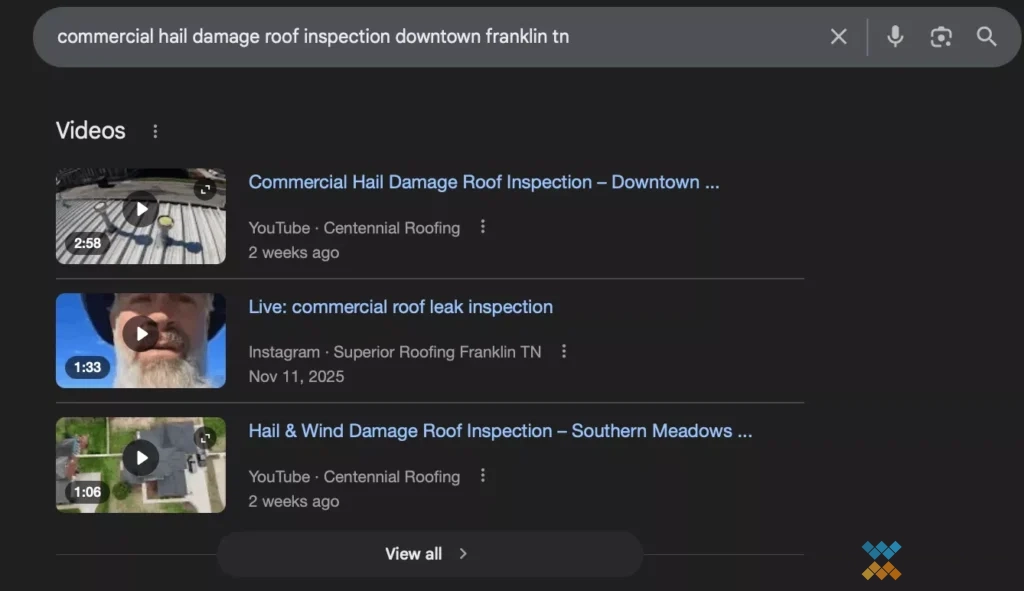
Publish video content answering common roofing questions, roof replacement cost, storm damage assessment, and material comparisons, because video from social platforms is eligible to appear directly in Google Search results and AI features.
Google’s search documentation confirms this eligibility. As of Google Search Central’s current guidance on generative AI features, Google’s AI search experiences “can bring in relevant images and video,” and following standard video SEO documentation is the stated path to qualifying; no special AI-specific optimization is required.
When homeowners search for the cost of roof replacement or a less common roofing service, Google frequently serves them a video from someone who can provide a real-world perspective. A roofing contractor who films a two-minute answer to a question homeowners actually search is competing for those video placements.
To maximize eligibility, add timestamped chapters to your videos. Google’s video documentation states that timestamps and labels in a YouTube description, or Clip and SeekToAction structured data for videos embedded on your own site, enable the key moments feature, which lets Google link searchers directly to the segment that answers their question.
2) Master Short-Form Videos
Short-form video on Instagram and TikTok reaches the age groups that include nearly all first-time homebuyers. According to the Pew Research Center’s November 2025 social media report, 80% of US adults ages 18–29 use Instagram, 37% of all US adults use TikTok, and roughly half of adults under 30 open TikTok at least once a day.
Reaching these homeowners requires the skill to produce and optimize short-form videos on these platforms, or a deliberate decision to delegate the work.
Use these criteria to decide between in-house and agency production:
- Keep it in-house if a crew member or office staffer can reliably film and post during normal work weeks; the raw, unpolished style performs well for contractors (see Tip 4).
- Hire an agency or freelancer if no one on staff can sustain a posting schedule, or if your market requires paid social management alongside organic content.
The deciding factor is consistency rather than production quality.
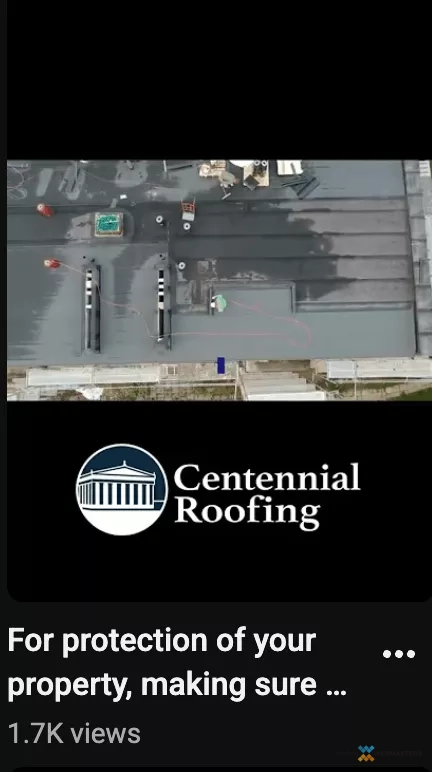
In storm-prone markets, short-form video has a specific high-intent use case: 15-second before-and-after videos and quick roof damage assessment tips posted in the days after a major hailstorm, when homeowner search activity in your service area spikes.
Platform Comparison for Roofing Companies
| Platform | Audience (US adults) | Best content format | Production effort | Primary role for roofers |
|---|---|---|---|---|
| 71% of adults use it; daily use highest among ages 30–64 (Pew, 2025) | Job photos, community posts, reviews, paid ads | Low | Local trust, reviews, and paid lead generation | |
| 50% of adults; 80% of ages 18–29 (Pew, 2025) | Reels, before/after photos, Stories | Medium | Reaching younger homeowners; visual proof of work | |
| YouTube | 84% of adults, the most-used platform (Pew, 2025) | Shorts plus longer explainers | Medium–High | Search visibility: videos eligible for Google SERPs and AI features |
| TikTok | 37% of adults; ~half of under-30s use it daily (Pew, 2025) | Short-form video only | Medium | Reach and brand familiarity with the youngest homeowner cohort |
If you can only sustain one platform, choose based on your market: Facebook for established suburban markets where homeowners skew 35+, YouTube if your goal is search visibility, and Instagram or TikTok if your service area skews toward first-time buyers.
3) Integrate Social Media With Your Website
Connecting your social profiles to your website helps Google recognize them as part of one business entity, a process practitioners call entity reconciliation.
Google’s documented mechanism for this is Organization structured data. Google Search Central’s Organization markup documentation lists sameAs as a recommended property and states that Organization markup helps Google understand a business and surface its details in features like knowledge panels and brand profiles.
Using the “sameAs” schema attribute within your website’s code, you can explicitly tell Google that specific social media profiles belong to your roofing company and its official website.
Your Google Business Profile is the second place to declare these links. Google’s Business Profile documentation states that businesses can add one link per social platform under Edit profile → Contact → Social profiles, which controls the social icons shown on your profile in Google Search and Maps.
Note that Google lists this feature as available in select regions. Set both: schema markup on your website and the links in your GBP dashboard.

4) Humanize Your Roofing Brand
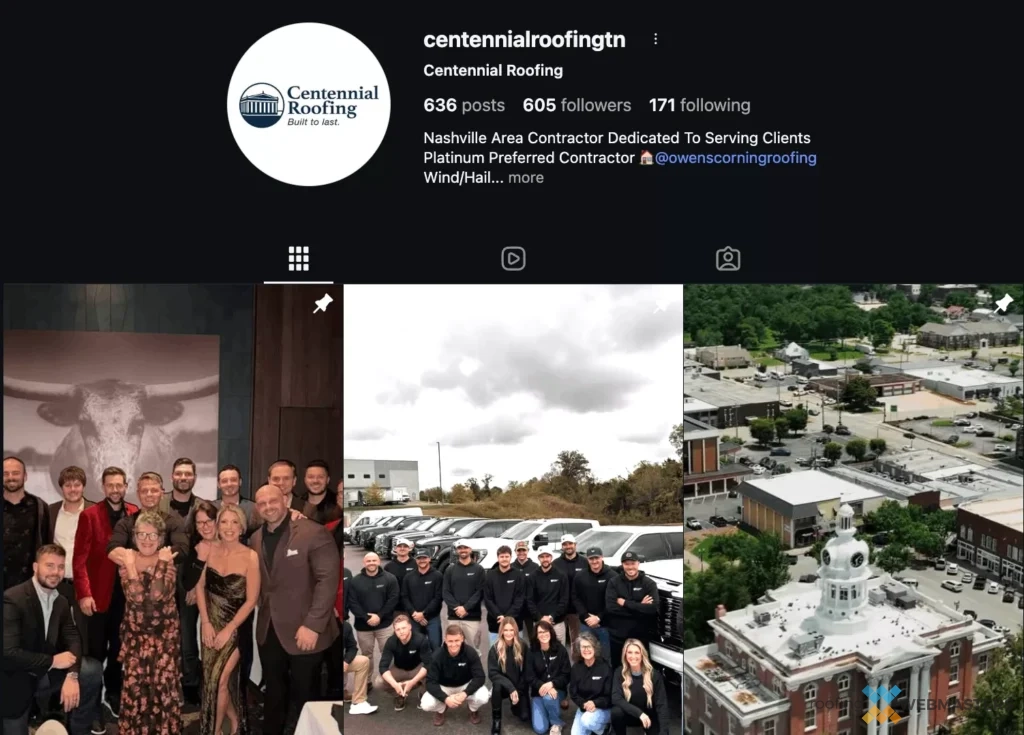
Homeowners trust people, not corporations. That’s why humanizing your brand through relatable social media content, such as why you started your business, is more effective than relying on elite production values.
Based on work with roofing clients at Roofing Webmasters, an “in the truck” series is a reliable starting format: a crew member films the drive to a roofing job, the arrival at the site, and the work in progress, so the consumer can envision your day-to-day routine.
Filming your staff at local events, a high school football game, or a community fundraiser serves the same purpose. Community presence content builds the familiarity and rapport that homeowners weigh when choosing among contractors with similar reviews.
5) Use AI for Content Brainstorming
Use AI tools to brainstorm post ideas and draft scripts, but do not use AI to generate the videos themselves.
The reason is the trust mechanism described in Tip 4. The value of contractor social content comes from homeowners seeing real people doing real work in their community; AI-generated footage removes the very authenticity the content is meant to demonstrate.
Platforms and viewers increasingly flag synthetic content, and a roofing brand caught passing off AI-generated jobs as real work damages the trust it was trying to build.
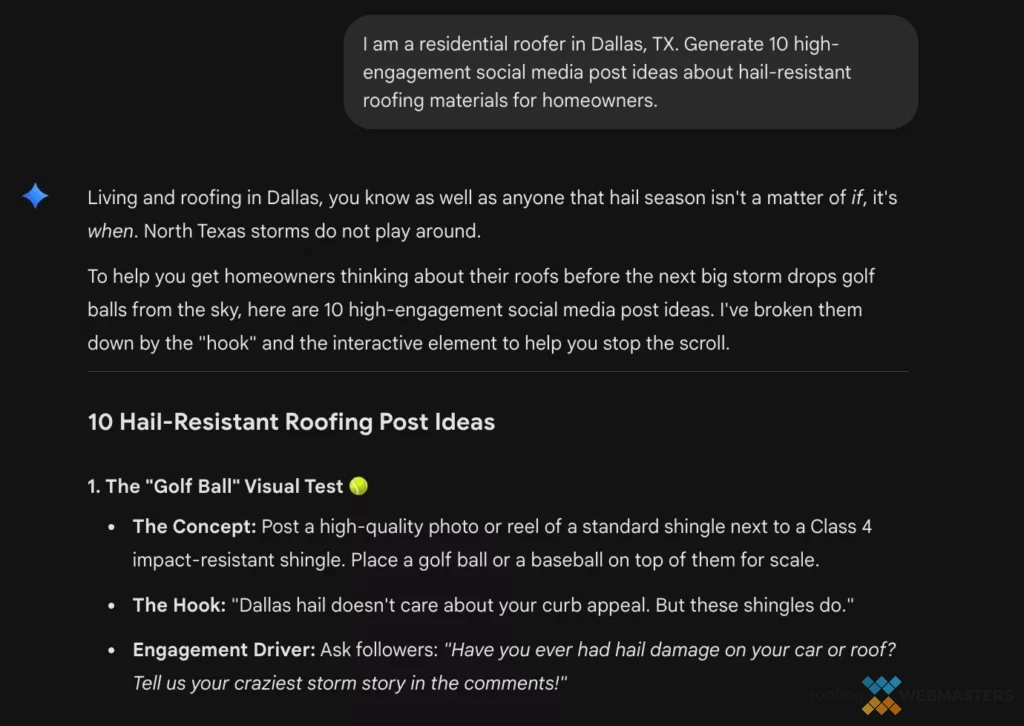
For brainstorming, open ChatGPT or Gemini and paste the following prompt:
“I am a residential roofer in Dallas, TX. Generate 10 high-engagement social media post ideas about hail-resistant roofing materials for homeowners.”
You can adjust this prompt to fit your primary services, which should give you tons of content ideas to fill your social media content schedule.
6) Abide By The 80/20 Rule
Homeowners use social media to be educated and entertained, not to be sold to. That’s why you should abide by the 80/20 rule: 80% educational and entertainment content, 20% promotional content.
Any content featuring educational tips, job showcases, and community involvement counts toward your 80%, while content highlighting special offers or financing counts toward the 20%.
The 80/20 rule applies at two levels: across your entire content library, and within a single piece of content. A call to action at the end of a YouTube Short, for example, should occupy 20% or less of the total video.
7) Localize Social Media
Social media marketing works best for roofers when the content is localized to the company’s defined service area, the same principle that governs local SEO.
The goal of your content is to say to homeowners, we are active and trusted in your community, something you can only achieve by talking about and showcasing the areas you serve.
City-specific job showcases (a completed roof in a named neighborhood, storm repair work in a specific suburb) are the most direct format for this.
In our practitioner experience at Roofing Webmasters, in tight-knit communities, hyper-local tags (like naming a specific town) often generate higher engagement and shares than generic regional marketing, because neighbors instantly recognize the properties you are working on.
8) Maintain Visual Consistency
Consistent branding across social platforms reinforces the same entity signals described in Tip 3: when your business name, logo, and contact information match everywhere, both homeowners and search engines can confidently connect your profiles to one company.
NAP stands for name, address, and phone number, but your consistency should expand beyond that as well, including your brand voice, which is the style and tone of the content you distribute.
Whether your videos portray a no-nonsense roofing expert or a friendly neighborhood helper, it’s essential that the theme appears across Facebook, Instagram, YouTube, and TikTok.
9) Distinguish Organic from Paid
Organic social media posts build search visibility and long-term trust while paid channels generate direct leads.
Based on campaign analysis across the Roofing Webmasters client network, organic posts rarely generate immediate job inquiries on the platform itself; their value appears in branded search, profile visits, and homeowner familiarity at decision time.
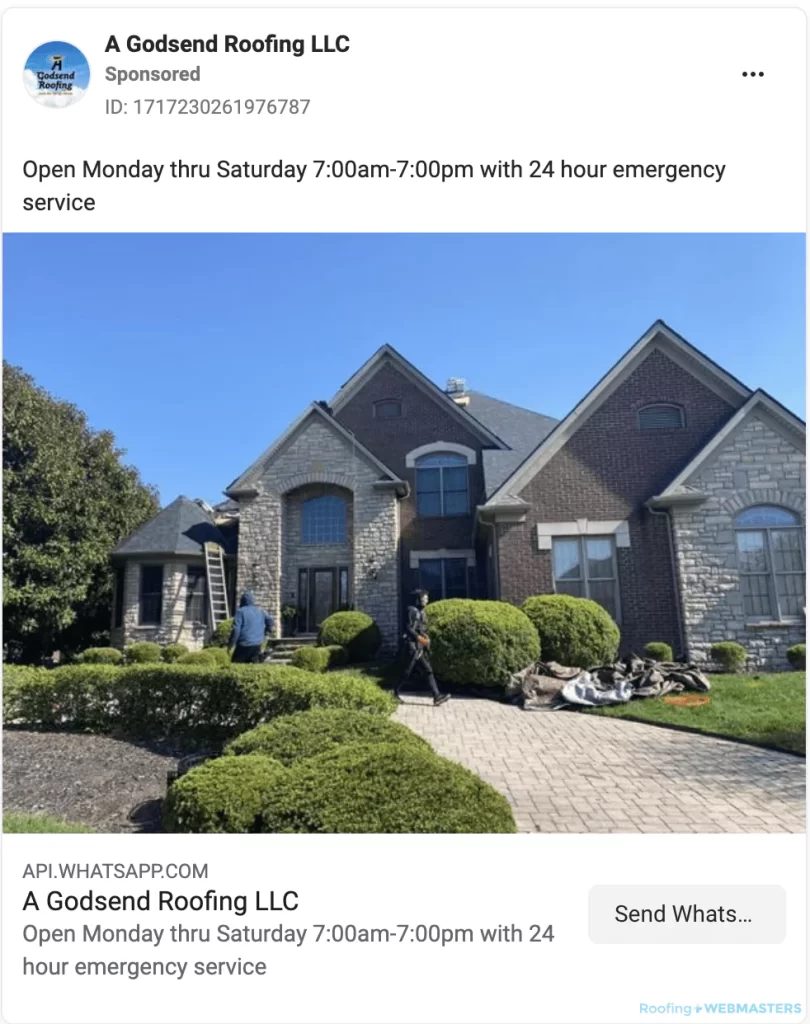
If you’re targeting immediate lead generation, you have two primary paid options, and they charge differently:
- Meta Ads run on an auction model; you pay for impressions or campaign objectives, and you can target homeowners in specific cities and even neighborhoods with your best offers.
- Google Local Services Ads (LSA) charge per valid lead. Google’s Local Services documentation states that you pay only when a potential customer contacts you through the ad, and leads judged invalid or low quality are not charged or are credited.
The practical difference: Meta Ads cost money whether or not anyone contacts you, but offer creative control and neighborhood-level targeting for offer-driven campaigns.
LSA spend maps directly to inquiries, which makes budgeting more predictable for service businesses. Roofers running both typically use LSA to capture active searchers and Meta Ads to generate demand after storms or for seasonal offers.
How Often Should a Roofing Company Post?
There is no platform-documented posting quota, and no published study establishes a posting frequency benchmark specifically for roofing contractors.
The cadence below reflects Roofing Webmasters’ working recommendation for clients, calibrated to what a typical residential roofing operation can sustain; consistency over months matters more than volume in any single week.
A sustainable weekly baseline:
- 2–3 short-form videos (job showcases, quick tips, in-the-truck clips) posted to Instagram Reels, TikTok, and YouTube Shorts, film once, post to all three
- 1–2 Facebook posts (completed job photos with city named, community involvement, review highlights)
- 1 longer YouTube video per month answering a question homeowners search (replacement cost factors, insurance claim process, material comparisons)
- Storm response: in storm-prone markets, add damage-assessment and availability posts within 48 hours of a major weather event; this is the highest-intent window on the calendar
In terms of cost, the organic baseline above is primarily a time investment: a few hours per week of filming and posting, handled by an owner or a designated staff member.
Paid budgets (Meta Ads, LSA) are separate and scale with lead targets; see Tip 9 for how each channel charges.
When Social Media Doesn’t Work for Roofing Companies
Social media marketing has real limits, and recognizing them saves wasted effort.
Commercial and Industrial Roofing Contractors
Commercial roofers should not expect homeowner-style social tactics to transfer. The tips in this article target residential buyers researching contractors on consumer platforms.
Commercial roofing decisions are made by property managers, facility directors, and general contractors, a buyer pool that is reached more effectively through a LinkedIn presence, case-study content on your website, and direct relationships than through TikTok or Instagram.
Solo Operators With No Delegable Time
Solo operators face an honest tradeoff. If you are running crews, quoting jobs, and handling the books yourself, a half-maintained social presence, last post eight months ago, can look worse to a researching homeowner than no presence at all.
In that situation, prioritize your Google Business Profile and review responses first; add one platform only when you can sustain it.
Rural and Low-Density Service Areas
Rural service areas can break the localization model. City-specific content assumes enough jobs and recognizable landmarks to post about regularly.
Most roofers serving wide rural territories should focus their efforts on Google Business Profile, LSA, and word-of-mouth amplification (sharing customer reviews) rather than neighborhood-level social content.
If Your Posts Get No Engagement
The most common causes of low or zero engagement, in order:
- promotional content exceeding the 80/20 ratio (homeowners scroll past sales posts),
- generic content with no local markers (a roof photo that could be anywhere earns no recognition),
- Inconsistent posting (platform feeds deprioritize accounts that post sporadically).
Fix the ratio and the local specificity before concluding the channel doesn’t work.
Moving Forward With Social Media Marketing
Social media content now feeds the same systems that determine roofing companies’ search visibility.
Video from social platforms is eligible to appear in Google results and AI features, per Google’s documentation, and a majority of consumers consume video when researching local businesses (BrightLocal, 2025).
A workable roofing social strategy has four components: short-form video on the platforms your homeowners use, an 80/20 ratio of value content to promotion, localized job showcases tied to your service area, and sameAs schema connecting your profiles to your website.
Paid social and Local Services Ads remain the direct lead-generation channels, while organic social builds the visibility and trust that make those leads cheaper to convert.

Author: Nolen Walker
Nolen Walker is the founder of Roofing Webmasters and the creator of DataPins™, a Local SEO platform for roofing companies. He has over 16 years of experience helping roofing businesses grow through organic search, Google Maps, and AI-driven visibility.
Nolen is the author of
A Complete SEO Guide for the Roofing Small Business Owner. He also hosts
The Roofing SEO Podcast
on Spotify.